
About British Columbia’s Music + Sound Recording Industry
British Columbia is Canada’s third-largest music production hub, home to over 280 sound recording studios, 140+ record labels, and a thriving ecosystem of artists spanning hip-hop, indie rock, electronic, jazz, cultural, and classical genres. The province has produced internationally acclaimed legends such as Bryan Adams, Michael Bublé, Sarah McLachlan, Diana Krall, and Nickelback. This legacy continues with globally recognized contemporary artists including Carly Rae Jepsen, Mother Mother, Snotty Nose Rez Kids, Spiritbox, and Ocie Elliott, alongside today’s rising talents such as Peach Pit, bbno$, Jade LeMac, Ekkstacy, Cameron Whitcomb, Karan Aujla, and AP Dhillon, while today’s emerging talents continue to build on this legacy.
The music and sound recording industry encompasses the creation, production, and distribution of recorded music, alongside live performance infrastructure. This includes recording studios, record labels, music publishers, artist management, booking agencies, sound engineers, producers, live music venues, and festivals. From intimate studio sessions to major festivals, B.C.’s music professionals create experiences that resonate locally and globally.
The industry is evolving rapidly as streaming platforms, AI-driven production tools, and immersive live experiences reshape how music is created, distributed, and consumed. B.C.’s strength lies not only in its technical infrastructure but in its diverse creative community, artists, producers, engineers, managers, promoters, and venue operators, who champion discoverability, export B.C. talent worldwide, and strengthen the province’s cultural identity.

Recent Impacts
$484M
Total GDP in B.C.
$575M
Direct Output in B.C.
6,850
Total Jobs*
13,419
Est. People incl. Freelancers
What Changed This Year
Music + Sound Recording is B.C.’s fourth-largest creative industry, generating 6.5% of the sector’s GDP and 7.7% of its jobs. Estimated 2024 results ($484M in total GDP and 6,850 total jobs) show that the industry is continuing to stabilize from the pandemic. GDP is growing rapidly at 39.8% above preCOVID levels, while employment has stabilized. The 2024 estimates reflect the highest music GDP on record and the third-highest job count.
Over the long term, the industry has grown steadily, with an 8.9% CAGR in GDP and a 3.6% CAGR in jobs since 2015. (Source: CIERA™, 2024e)
Why This Matters
The music and sound recording industry has a rich history. It supports thousands of artists and venues, draws music fans from around the world, and carries diverse voices onto the global stage, with ripple effects felt in communities across the province.
More Information on CIERA™ and Sector Counts
The Music + Sound Recording Industry Mapped Across the Sector Value Chain
CIERA™ maps business activity classified by Statistics Canada through what is known as the North American Industry Classification System (NAICS). These NAICS codes are attributed in full or in part to a three-part sector value chain: Creation > Production > Sales + Distribution.
Some of the “culture industries” as defined by Statistics Canada contribute to more than one creative industry; these NAICS cannot easily be attributed to a single creative industry, nor can their business activities be proportionally allocated. In these cases, their economic contributions have been aggregated into CIERA™’s Multi-Creative Industry figures. Outlined boxes below are Multi-Creative Industry Services that contribute to this value chain. See those impacts here. See full annual CIERA™ tables.

A Note on Total Jobs and People
The Total Jobs figure is the sum of direct, indirect and induced numbers and it represents traditional FTE and PT equivalent jobs. It represents work, but not workers, and currently has limited ability to measure gig work. It must be noted that the creative industries include many people with gig work that is not easily assessed using this traditional measurement approach model. The estimated People figure measures hours worked in terms of positions, not the number of individual people working or sharing those positions. Because work in the creative industries is freelance and project-based, this methodology to measure estimated People is a proxy and may underestimate the total number of workers in the creative sector.
Sector Counts
The total number of companies in B.C. is informed by various data sources, including industry submissions, coordinated manual and automated outreach, and comprehensive research.
Ecosystem
Segments
Sound Recording and Production
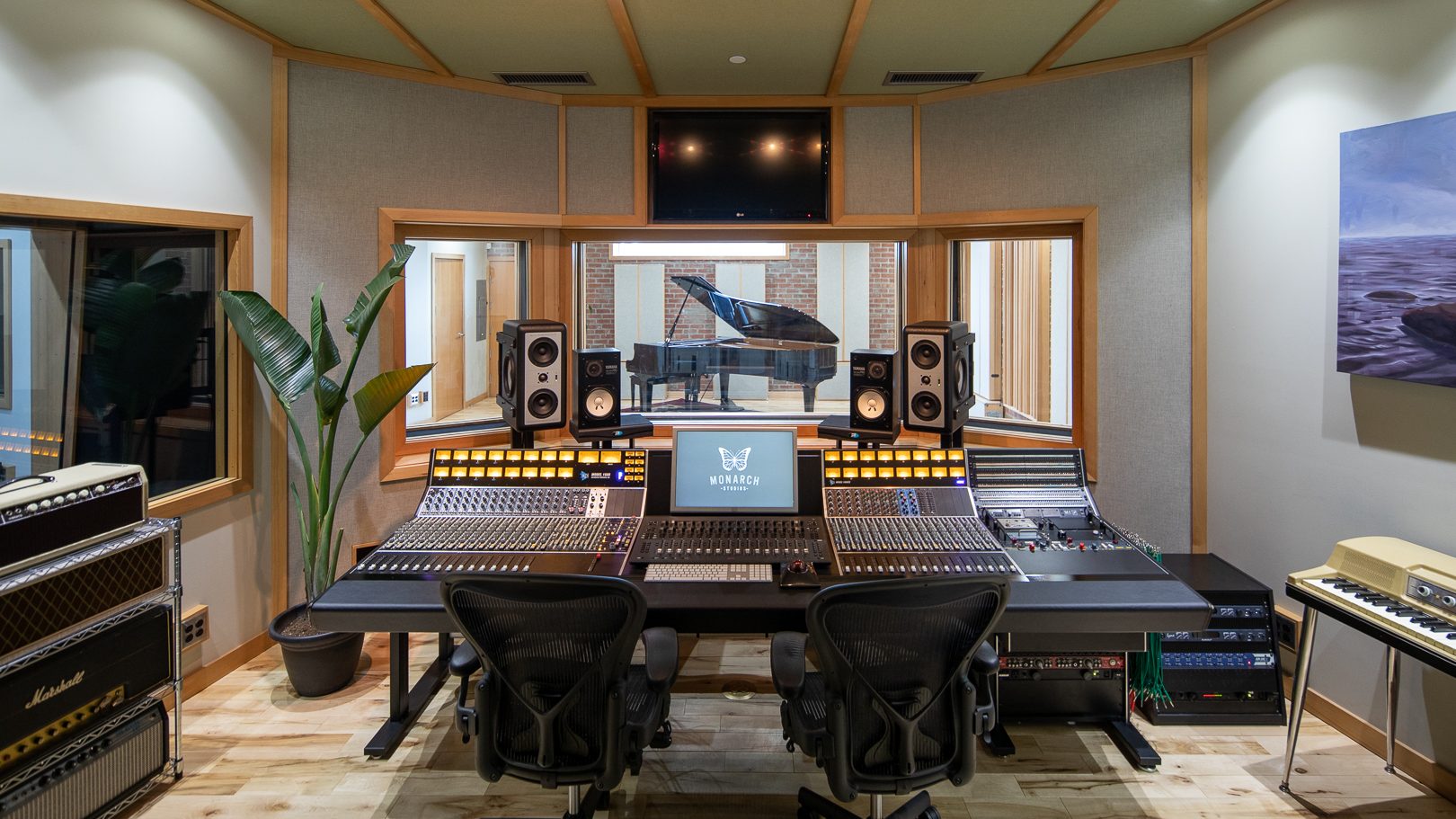
B.C.’s sound recording segment includes over 280 studios ranging from major facilities to independent project spaces. Flagship studios such as The Armoury Studios, Hipposonic Studios, and Monarch Studios serve local and international artists with recording, mixing, mastering, and post-production services. Supported by experienced producers and engineers, B.C. has become a destination for high-quality, collaborative sound production.
Record Labels
B.C. is home to more than 140+ record labels, largely independent and artist-focused. Notable companies such as Nettwerk Music Group, 604 Records, Monstercat, Light Organ Records, and Mint Records support talent development, rights management, marketing, and distribution. The province’s label ecosystem helps Canadian artists reach global audiences while maintaining creative control and building sustainable, revenue-generating careers.
Live Music
British Columbia’s live music ecosystem spans iconic venues like the Commodore Ballroom, Orpheum Theatre, and Vogue Theatre, and festivals including Rifflandia, Shambhala, Laketown Shakedown, Sunfest, Bass Coast, and Vancouver Folk Music Festival. Promoters such as Live Nation Canada and Blueprint Events support touring circuits, music tourism, and local economic activity while providing essential platforms for artist development and audience engagement.
Artist Development
Artist development in B.C. is supported by organizations including Music BC, Creative BC, and FACTOR, alongside programs like ARC Accelerator and Amplify BC. These initiatives deliver training, showcases, export readiness, and business skills for musicians at all stages. From debut releases to international expansion, the ecosystem helps artists build sustainable, competitive careers.
Music Publishing and Rights Management
Music publishing and rights management ensure songwriters and composers are compensated through licensing, royalties, and copyright administration. Companies and organizations such as SOCAN, Canadian Music Reproduction Rights Agency (CMRRA), and Nettwerk Music Group manage performance and reproduction rights while enabling sync placements across film, television, advertising, and games, supporting sustainable careers in a digital-first global market.
Associations
Music BC: provides the B.C. music industry with information, education, funding, advocacy, showcasing, and networking opportunities.
First Peoples Cultural Council: FPCC assists B.C. First Nations in their efforts to revitalize their languages, arts and cultures with a commitment to providing communities with a high level of support and quality resources.
BC Music Festival Collective: a non-profit industry association that was formed in April 2020 at the onset of the pandemic to provide a common voice and shared space to B.C.’s music festival industry. Festival members include non-profits and for-profits, all genres and sizes from across all regions of our province. Membership is open to any music festival based in B.C.
Resources
Unison: a non-profit organization that provides counselling, emergency relief, and benefit programs for those in the Canadian music community who face personal or professional challenges due to hardship, illness, unemployment or economic difficulties.
Find comprehensive resources such as funding tools, kits, and useful links via Music BC.
Funding
Creative BC Funding Programs: Creative BC’s Amplify BC Fund serves B.C. artists, live music presenters, music companies, and the development of the music industry. The B.C. government established Amplify BC in 2018, and continues to launch programs each year after extensive consultations with the music industry. Creative BC also has established partnerships with Music BC and the First Peoples’ Cultural Council to support the development of B.C.’s music industry.
BC Arts Council: nurtures and supports arts and cultural activity in communities across B.C. From community arts in rural and urban centres, to individual artists, professional performing arts companies, Indigenous artists and cultural organizations, art galleries, local museums and music festivals, BCAC supports a range of activities while engaging with artists and communities to inform policies and programs.
Destination Events Fund: supports tourism, arts, culture and sport events throughout British Columbia to drive economic growth and position the province as a leading destination for diverse events.
Canada Council for the Arts: Canada’s National Arts Funder. We fund Canadian artists and arts organizations.
FACTOR: supports the production of sound recordings by Canadian musicians and helps Canadian music companies make recordings available to a wider public.
SOCAN Foundation: fosters, sustains, and promotes the creation of Canadian music.
Education and Careers
Academic and Training
Professional Development and Mentorship
Jobs
Find jobs via the BC Arts Alliance or WorkInCulture.
Our Industry Partner